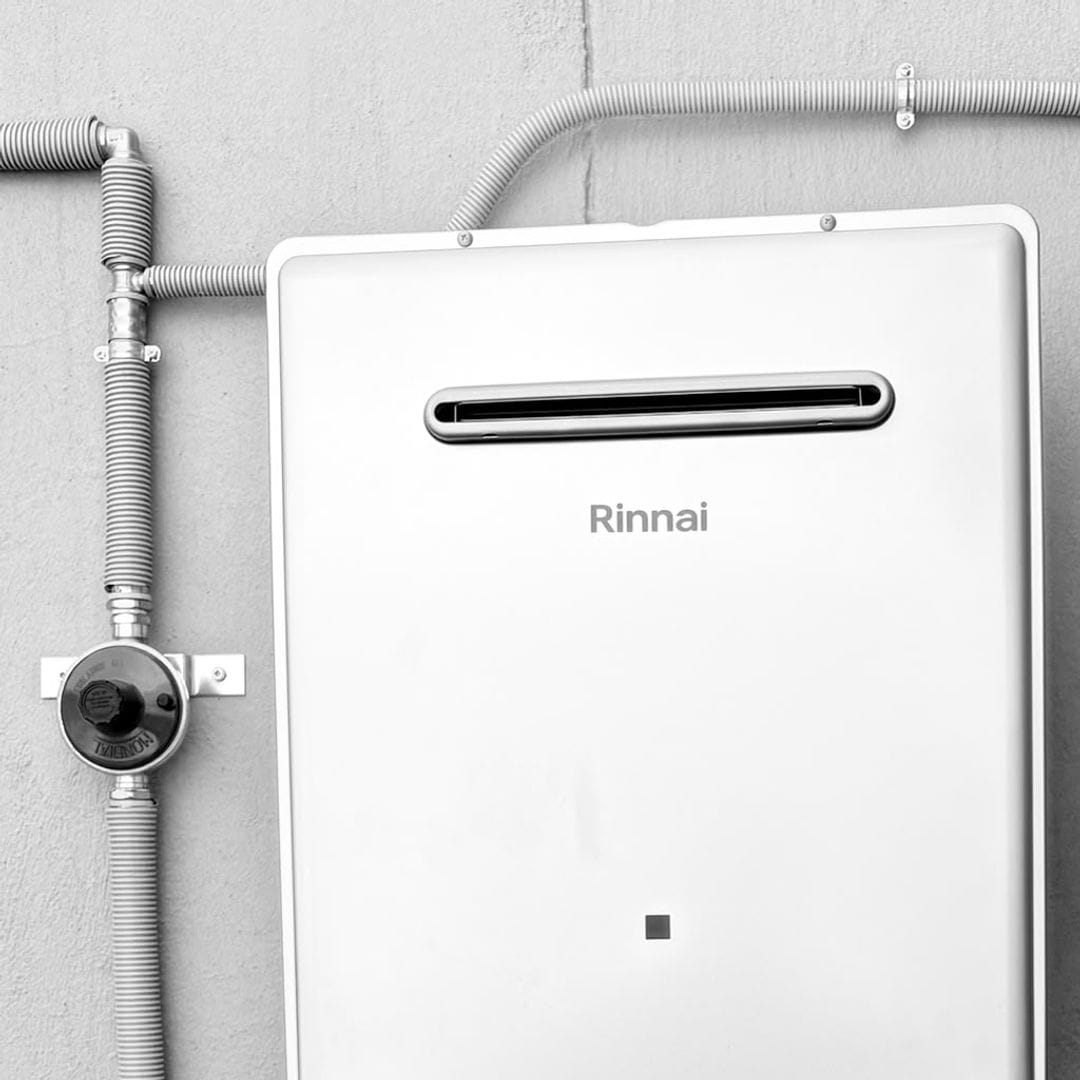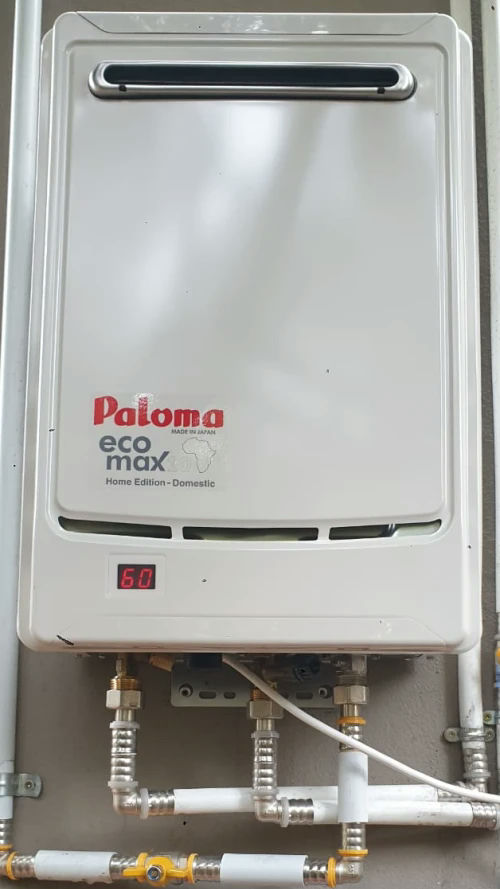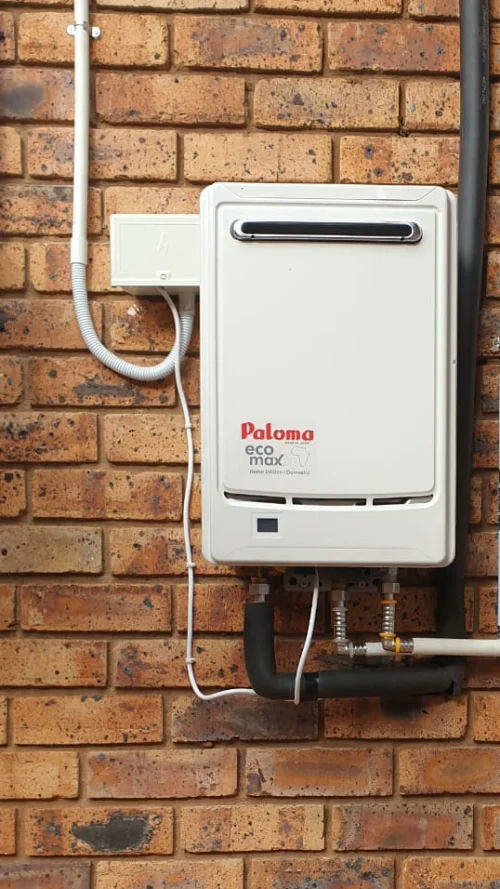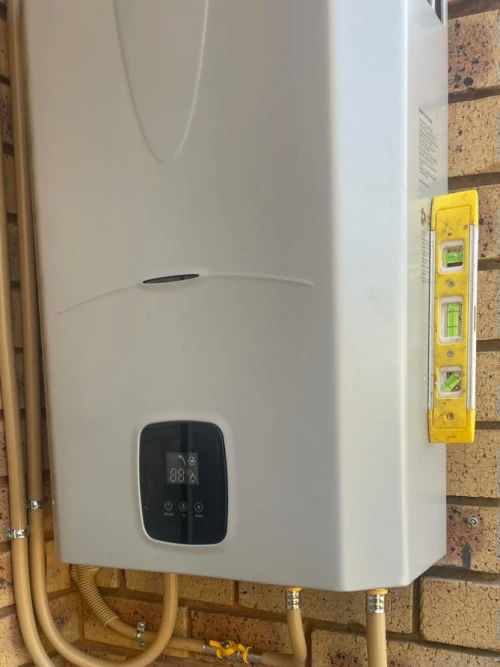
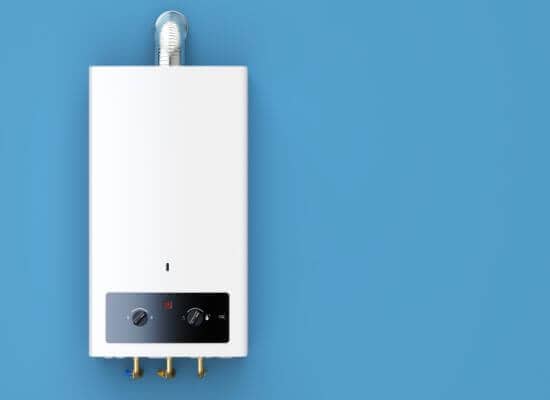
Which type of gas geyser
- Standard (manual) geysers are the cheapest. They suit a small home with one hot tap at a time, need a flue, and are sensitive to low water pressure.
- Constant-temperature geysers let you set the water temperature on a keypad and usually run two taps at once.
- Fan-forced (room-sealed) geysers cost more but use gas more efficiently, can feed several taps and an upstairs bathroom, and do not need a conventional flue. They need a plug point to run the fan and controls.
Our gas geyser guide and gas geyser prices page go into the types, brands and costs in more detail.
What size do you need?
Gas geysers are sized in litres per minute. Small units (5 to 10 L) suit a single basin or a kitchen sink. For a shower plus another tap at the same time, most homes need 12 to 16 L. Large homes with several bathrooms usually need 20 L or more, or two units. The installer works this out from the number of taps you want to run together and your water pressure.
Where it can go
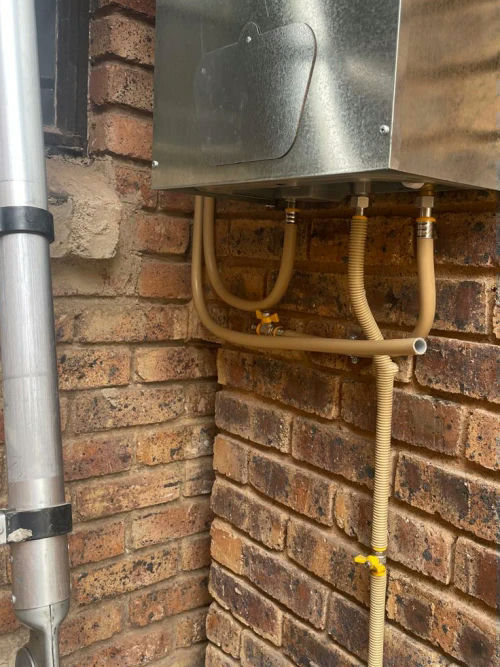
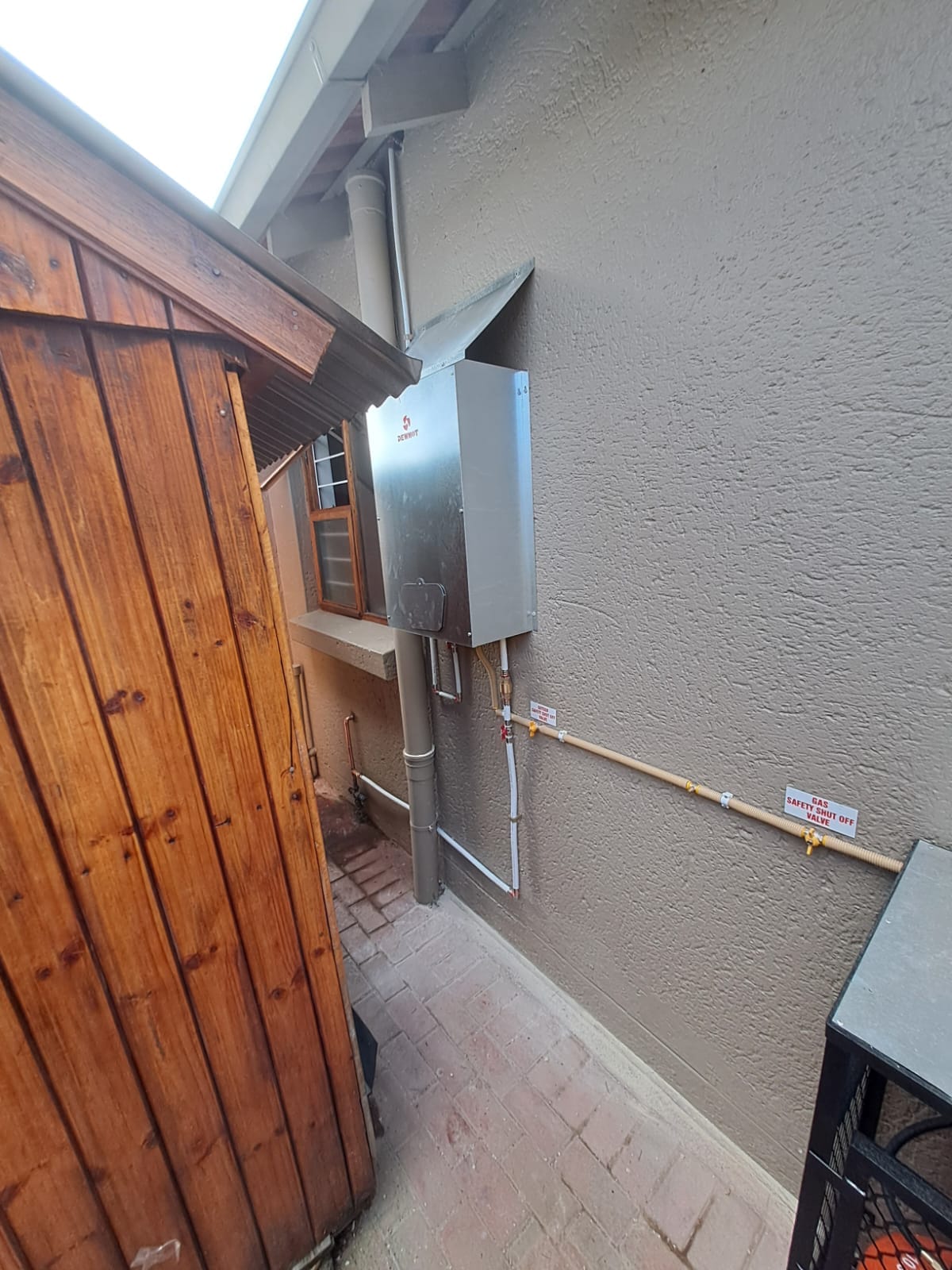
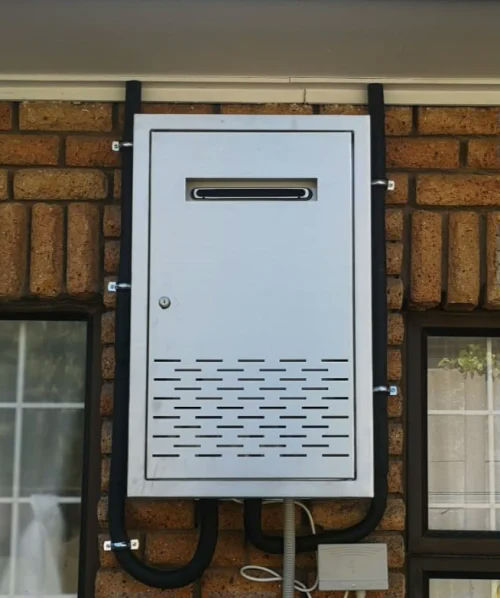
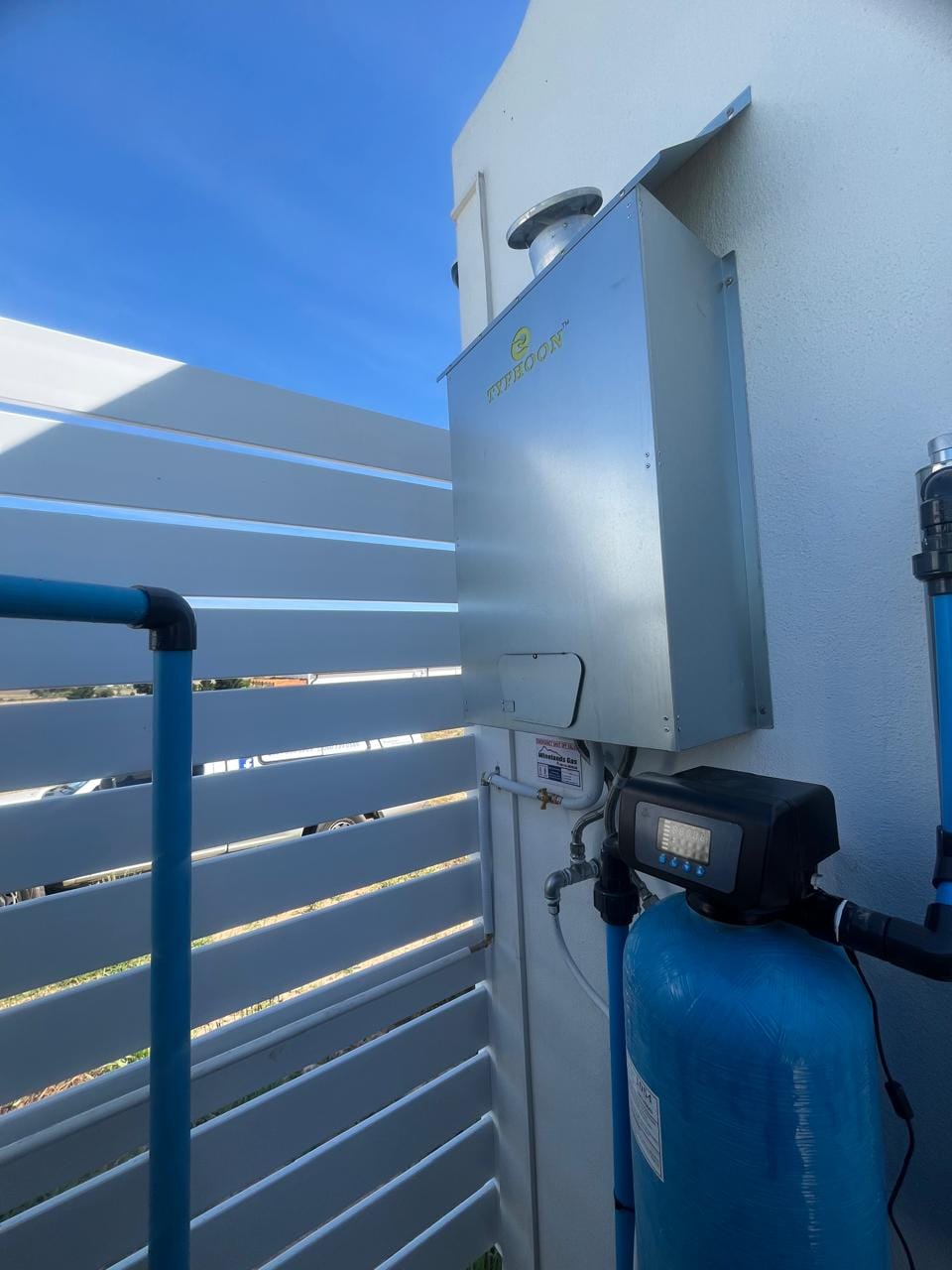
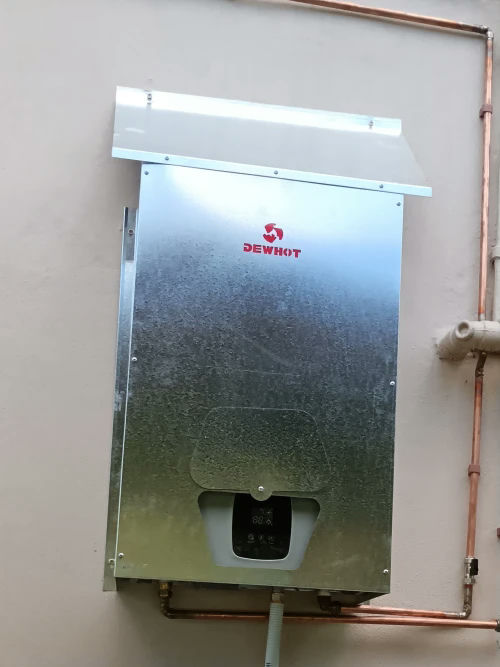
Most geysers are mounted on an outside wall, close to the bathroom, with a weather cover where the model needs one. Indoor installation is only allowed for models designed for it, with the flue and ventilation the manufacturer specifies. The gas cylinders stand outside on a firm base, away from drains, doors, windows and electrical switches.
What the installation involves
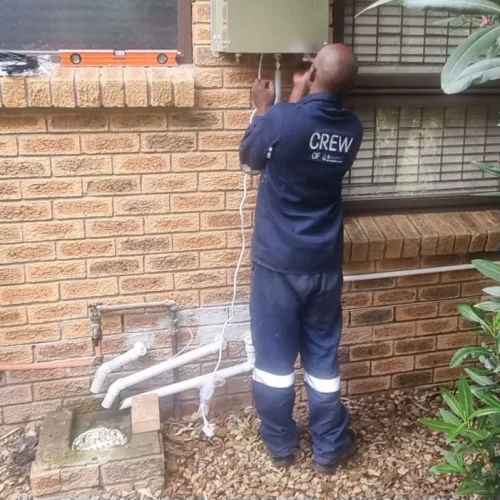
- Site check. The installer looks at the water pipes, where the geyser and cylinders will go, and the gas line route.
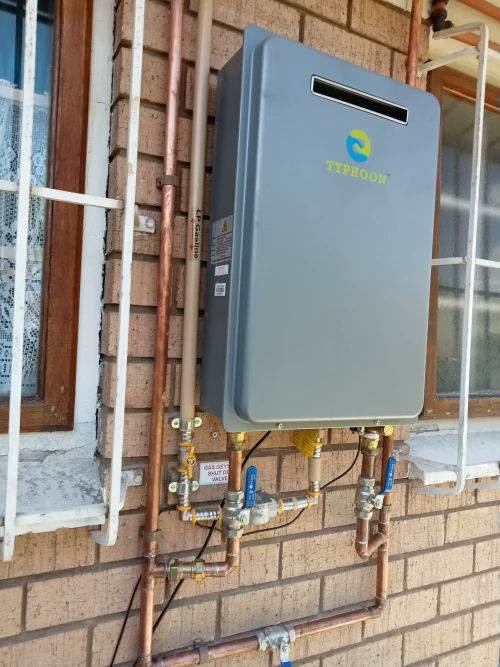
- Plumbing. Cold water in, hot water out to the house, usually with an isolating valve on each side.
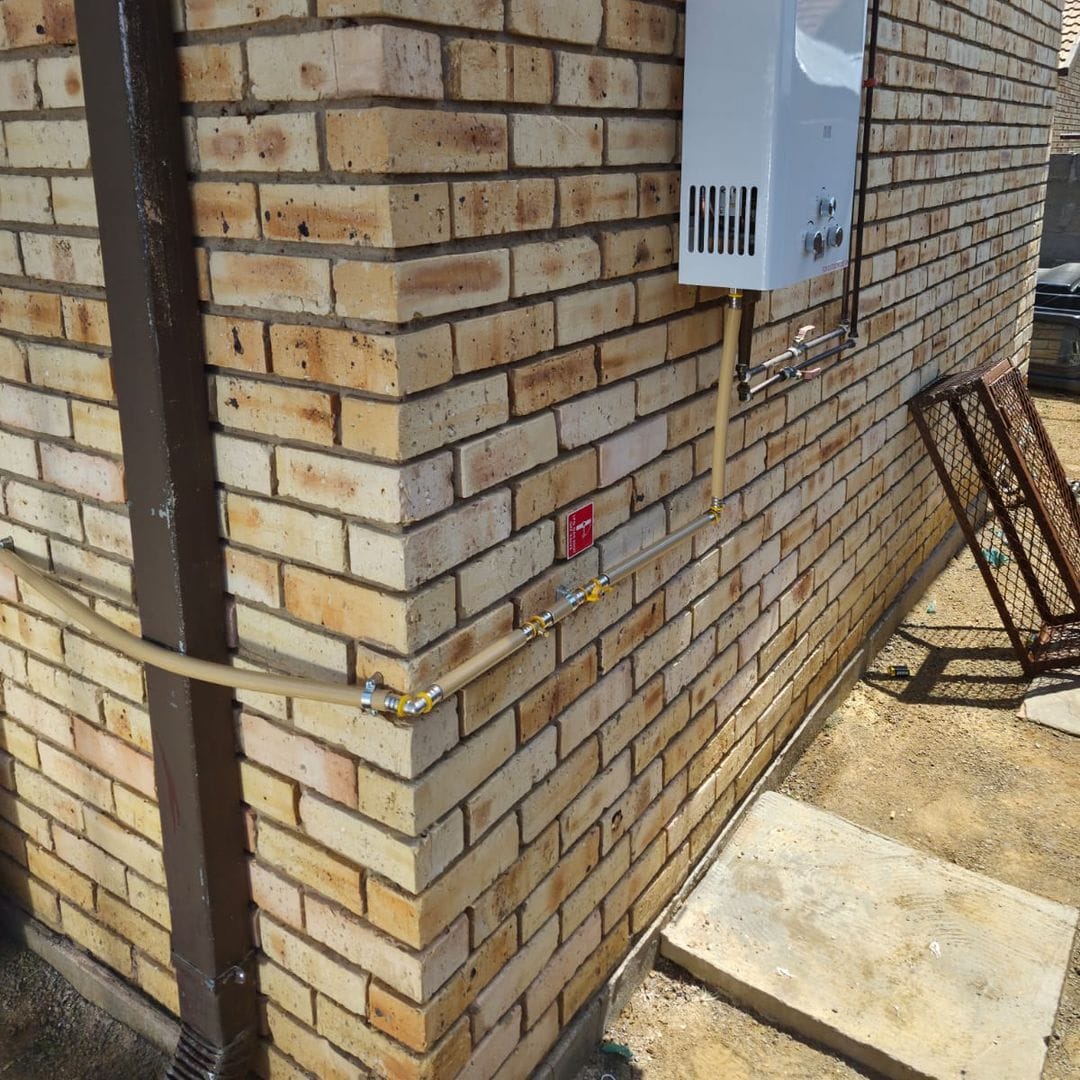
- Gas supply. Cylinders, regulator, changeover valve if there are two cylinders, and a copper gas line to the geyser.
- Testing. The gas line is pressure-tested for leaks and the geyser is lit and checked.
- Certificate of Conformity. The registered installer issues a gas CoC for the installation. See gas CoC.
What affects the price
- The geyser itself (type, size and brand), if the installer supplies it.
- How far the gas line and water pipes have to run, and how many bends and walls they pass through.
- Whether you already have cylinders, a cage and a regulator.
- Flue work, a weather cover and a plug point for fan-forced models.
- Removing the old electric geyser, if you are replacing one.
Where people ask for this
In the last 12 months, gas geyser installation requests through National Gas Installers came from East Rand (316), Pretoria (288), Johannesburg (246), Roodepoort (158), Alberton (107), Centurion (90), Cape Town (88), Bellville and Durbanville (77), Witbank (39), Durban (38), Bloemfontein (33), Bloubergstrand (28) and Strand and Somerset West (27). Each area page shows who the local installers are:
- Gas installers in East Rand
- Gas installers in Pretoria
- Gas installers in Johannesburg
- Gas installers in Roodepoort
- Gas installers in Alberton
- Gas installers in Centurion
- Gas installers in Cape Town
- Gas installers in Bellville and Durbanville
- Gas installers in Witbank
- Gas installers in Durban
- Gas installers in Bloemfontein
- Gas installers in Bloubergstrand
- Gas installers in Strand and Somerset West
Want a price for your gas geyser installation?
Get a quoteLast reviewed 2026-11-07. This guide is general information; the installer will advise on your installation after seeing it.